The Inner Ecosystem: Seed Oils and Inflammation


RHEUMATOLOGY FIREFIGHTERS — FIELD DISPATCHES
The Inner Ecosystem: Seed Oils and Inflammation
Issue 05 | Nisha J. Manek, MD, FACR, FACP, FRCP | ACR Convergence Dispatch
Dear Friend,
True healing means stopping the inflammation at its source and supporting the body’s natural firefighting by creating the right conditions. Our aim is to restore our ability to think clearly about health and disease from first principles. We need to understand that something deeper than weight, deeper than joints, and deeper than anything covered in the previous four issues is happening. Seed oils are a major hidden culprit in our fight against inflammation, disease and even aging. These products set the body’s inner terrain on fire. And we try to put it out with steroids, with ibuprofen, with antacids, and on and on. It won’t work.
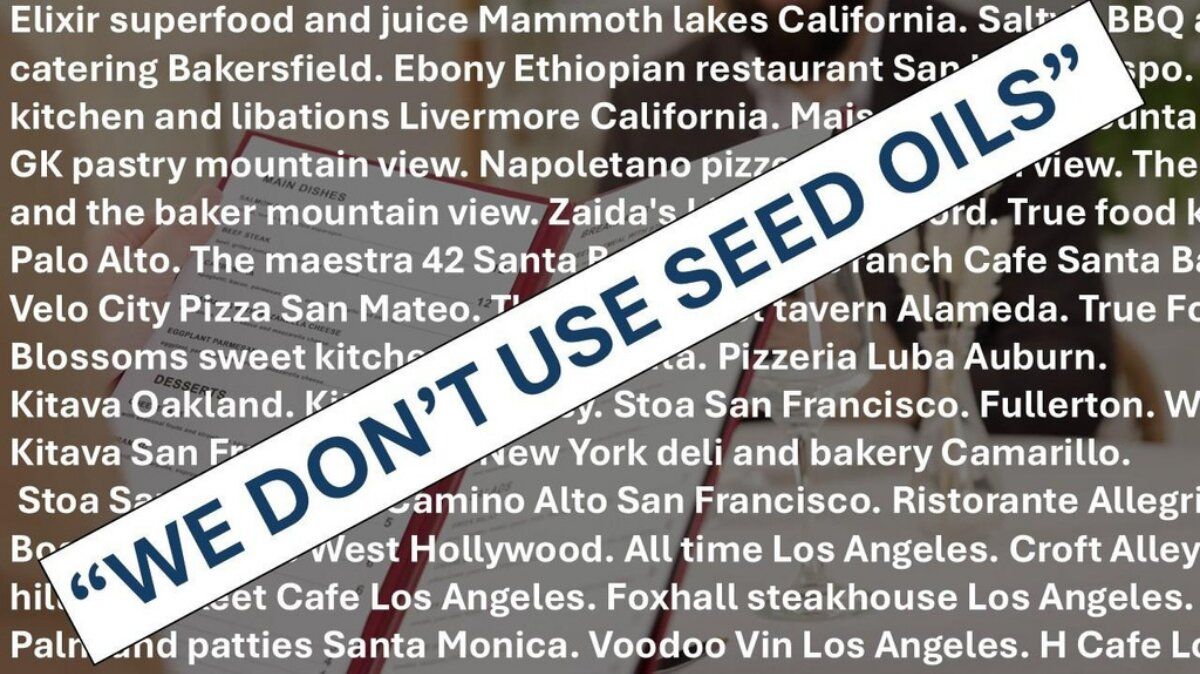
Social proof that the tide is turning.
Market forces confirm and restaurants are declaring “We don’t use seed oils.” Restaurants don't change their cooking oils for fun. Every razor thin margin in their ingredient list is under a microscope and switching costs are real. What we are talking about here is not fringe. This industry trend means customers are demanding it. These restaurants are using seed-oil-free cooking as a competitive advantage. The implicit question is: If restaurants know this, why don't we as physicians?
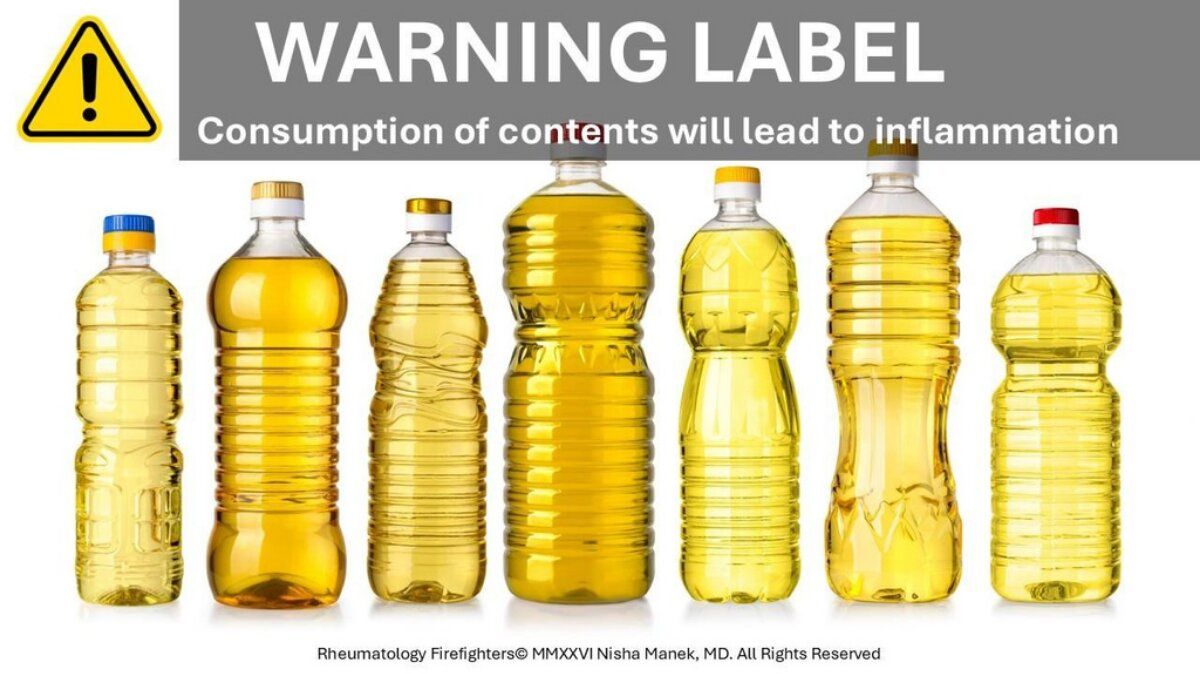
Think about that. The public is figuring this out faster than medicine is. And if we're putting warning labels on cigarettes for causing inflammation and disease, then every bottle of soybean oil, every container of ‘vegetable’ oil, should come with this warning:
‘Consumption of these contents will lead to inflammation.’
But they don't.
Instead, they're labeled ‘heart healthy.’ Seed oils belong in your car not your body.
The Blueprint for healing isn’t in your DNA.
For new thinking about the terrain, then we must consider the inner ecosystem. Most of the cells in your body are not human. You are, by cell count, more microbe than person. And the community of bacteria, viruses, fungi, and other microorganisms living inside you - your microbiome - is not a passenger in your health. It is, in many respects, the driver.
The microbiome contains 3.3 million genes, compared to 20,000 to 25,000 in the human genome. Those bacterial genes do not just sit there. They are active. They produce enzymes, vitamins, hormones, and signaling molecules that your own DNA cannot manufacture. They are running critical processes in your body right now, in every organ, including the ones we have been trying to treat with biologics and injections. You are not a person with bacteria. You are an ecosystem that happens to have a person on top.

Tanzania vs. California: A Study That Should Alarm Us.
Researchers at Stanford University sequenced the gut microbiomes of the members of a hunter-gatherer people in Tanzania, East Africa and compared them with people in California. The results, published in Nature, were stark.
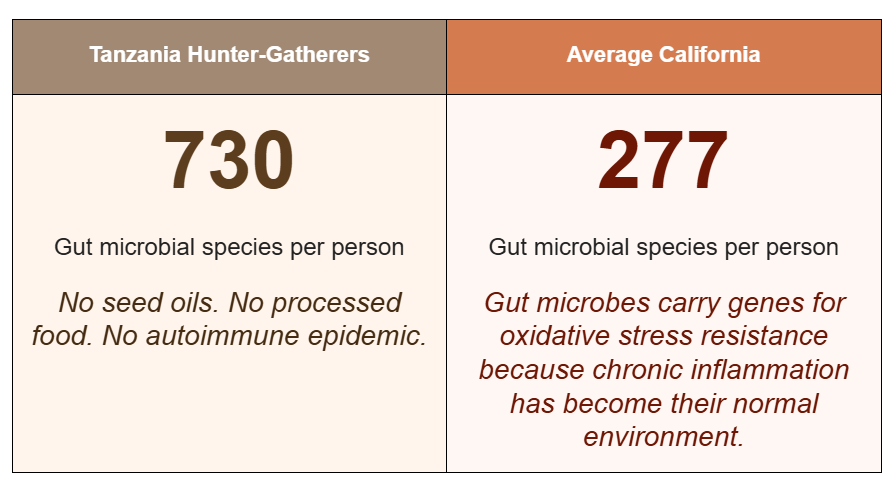
A person from Tanzania has bacterial species not found in Californian samples at all. Bacterial species that appear to be going extinct as societies industrialize. Species whose functions we have not even fully catalogued yet. Stanford microbiologist Samuel Forster called it effectively an extinction event happening silently, inside us, one generation at a time. The researchers suspect chronic gut inflammation had become so constant that the bacteria evolved to survive it.

This is not alternative medicine. This is published in Nature, Science, Cell, and the Proceedings of the National Academy of Sciences. The microbiome is now one of the most intensively studied areas in all of biology. What it has revealed, consistently, is that the gap between a healthy microbiome and a depleted one corresponds almost exactly with the gap between a resilient immune system and an inflamed one.

Butyrate to the Rescue.
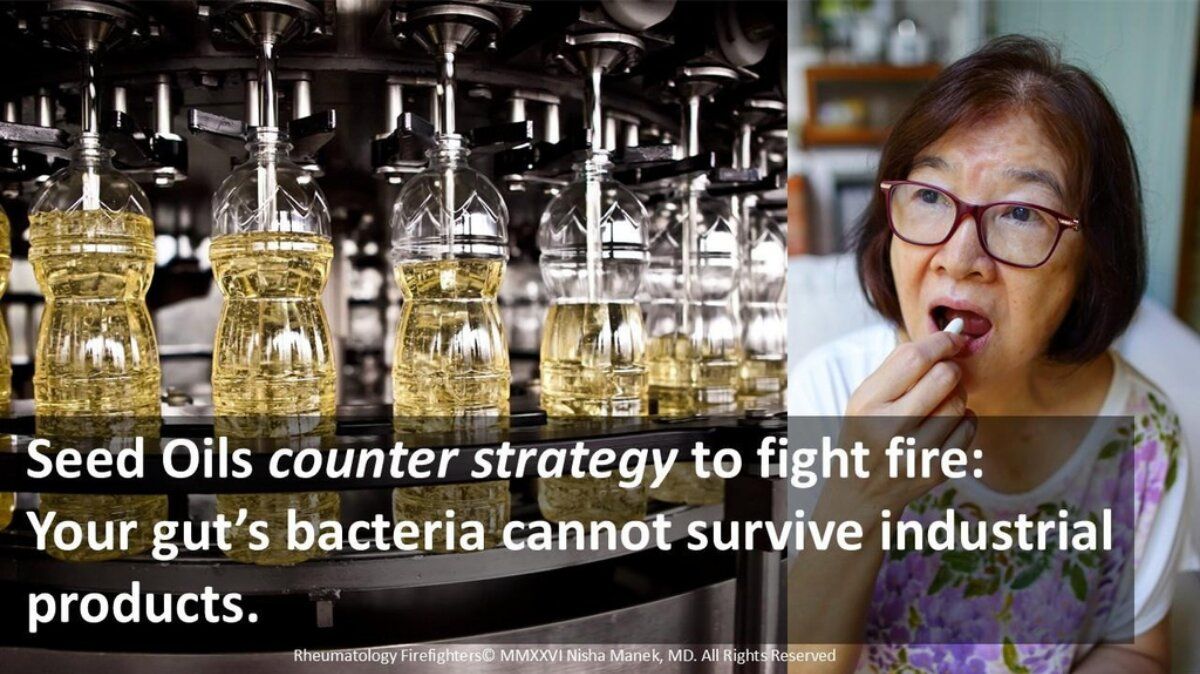
The key bacteria for inflammation control in rheumatoid arthritis are Faecalibacterium prausnitzii. In RA patients, F. prausnitzii is consistently, measurably reduced. This species produces butyrate. This is a writer downer. Butyrate is a key fire-fighting tool. When patients come to me, I recommend probiotics to restore their microbiome. Here's the problem. They go home, take the probiotic capsule...and cook their dinner in seed oils. They are incompatible. We have been prescribing anti-inflammatory biologics to compensate for a deficit that may, in part, be caused by what our patients are eating for dinner.
THE SCIENCE OF BUTYRATE
Butyrate is a short-chain fatty acid produced by gut bacteria when they ferment dietary fiber. It is the primary energy source for the cells lining the colon. And it does something extraordinary from a rheumatological perspective:
Butyrate directly inhibits NF-κB.
NF-κB is the master transcription factor of the inflammatory cascade. It controls the genes that produce inflammatory proteins called cytokines: TNF-α, IL-1β, IL-6. These are the very targets of the biologic drugs we prescribe. Butyrate inhibits NF-κB activation in mucosal biopsies. The bacteria are doing, through diet, what our most expensive drugs attempt to do through injection.
“In RA patients, Faecalibacterium is reduced. As F. prausnitzii produces butyrate, any food or compound that leads to production of butyrate is good for disease control.”
— Dr. Veena Taneja, Mayo Clinic, Rochester, MN
The Full Circle Moment
Now. The surprise. In Issue 3, I gave you a recipe. Three ingredients. Extra virgin olive oil, fresh lemon juice, sea salt. Throw out the seed oil dressings. Sharon lost 20 pounds. The fire began to cool.
There is one more ingredient. And it comes from the same tradition that gave us the principle of food as medicine. It comes from Ayurveda. It has been in continuous use for three thousand years. And modern biochemistry has now told us exactly why it works. Ghee provides butyrate directly! It isn’t toxic to your ecosystem. It replaces seed oils at the cooking stage where the damage begins. It is stable at room temperature, shelf-stable without refrigeration, and has been a staple fat in many traditional cuisines.
Your firefighting team, equipped with ghee. Butyrate produced by your gut bacteria inhibits the same inflammatory pathway of NF-κB - that biologics target. The bacteria can fight the fire from within. We just have to stop poisoning them.

COMING IN ISSUE 06: Something Fishy. The omega-3 story - the counter-fire to seed oils. But is it?
Until next time tend your inner ecosystem. It is tending you.
Nisha J. Manek, MD. FACR, FACP, FRCP | Rheumatologist | ACR Convergence 2025, Chicago
DISCLAIMER: The contents of this newsletter are for educational and informational purposes only and do not constitute medical advice. The views expressed reflect the author’s professional perspective and are not intended to replace a clinical consultation. Please consult your physician or a qualified healthcare provider regarding any specific questions about nutrition, supplementation, or your individual health needs.