Old MacDonald Had a Farm

Dear Friend,
Meet Anna, a nurse in Rheumatology. She told me of her struggles about finding good food in her local supermarket and eating well. She is aware of what the nutrition guidelines and food pyramid say. Anna worries about when she goes home after work and tries to feed her family.
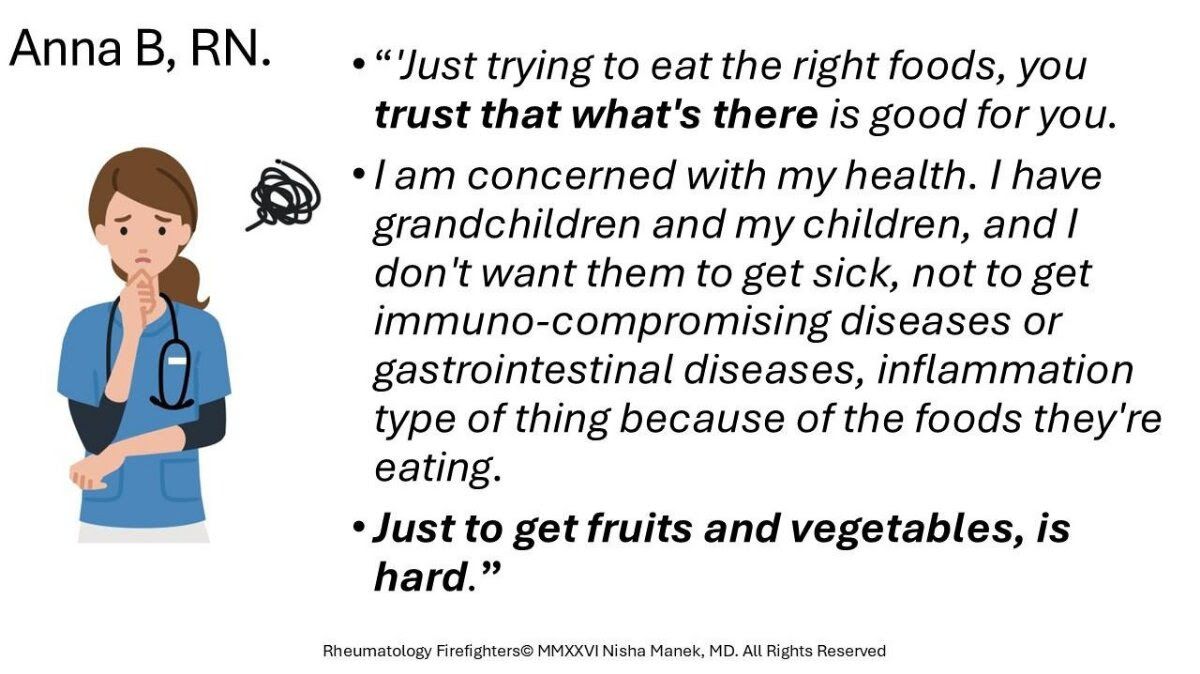
She talked about trust, and about how hard the simplest thing has become.
“Just trying to eat the right foods, you trust that what's there is good for you. I am concerned with my health. I have grandchildren and my children, and I don't want them to get sick, not to get immuno-compromising diseases or gastrointestinal diseases, inflammation type of thing because of the foods they're eating. Just to get fruits and vegetables is hard.”
A nurse said that. Someone who knows about health and disease prevention. She is aware that gut health is important to prevent chronic inflammatory diseases, not only in herself but her children. If it is hard for her, it is not a willpower problem. It is a systems problem.
Where Do We Send Anna?
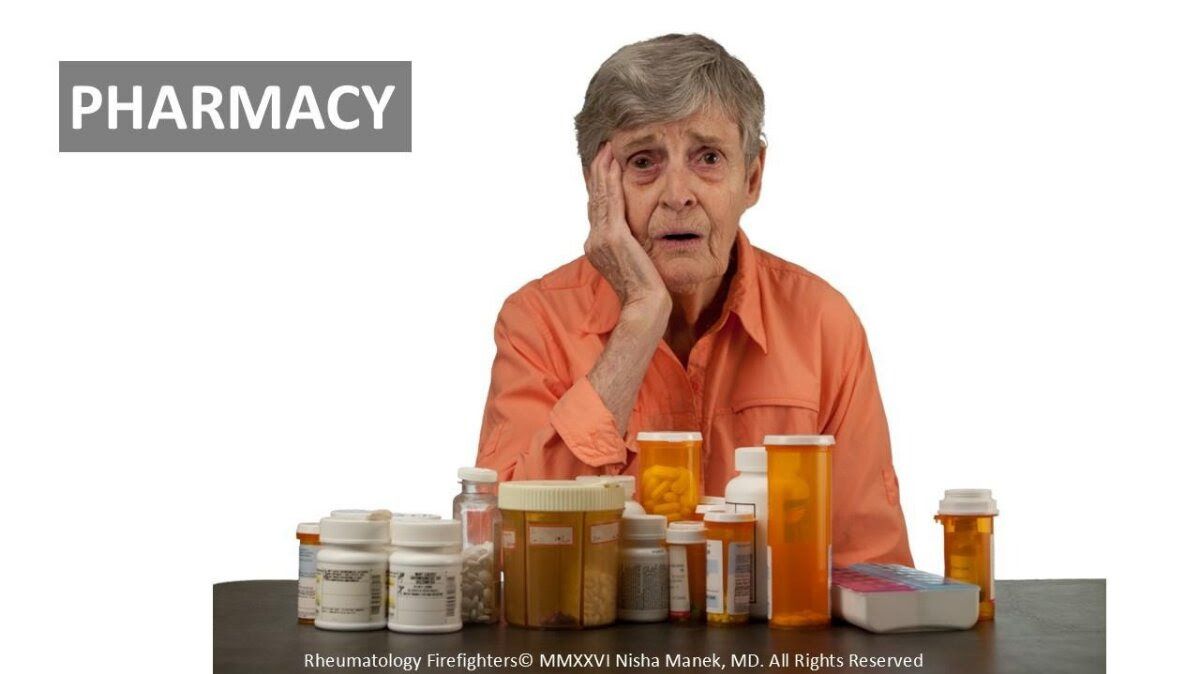
Anna’s health: “I get bloating. I have heartburn and don’t have regular bowel movements. It’s hard to concentrate in clinic.” So, where do we send someone who wants to get well? Almost always, we send her to the pharmacy, script in hand. In fact, Anna is on antacids, and her doctor is considering medications to control her tummy cramping.
What if we sent her to the farmacy instead?
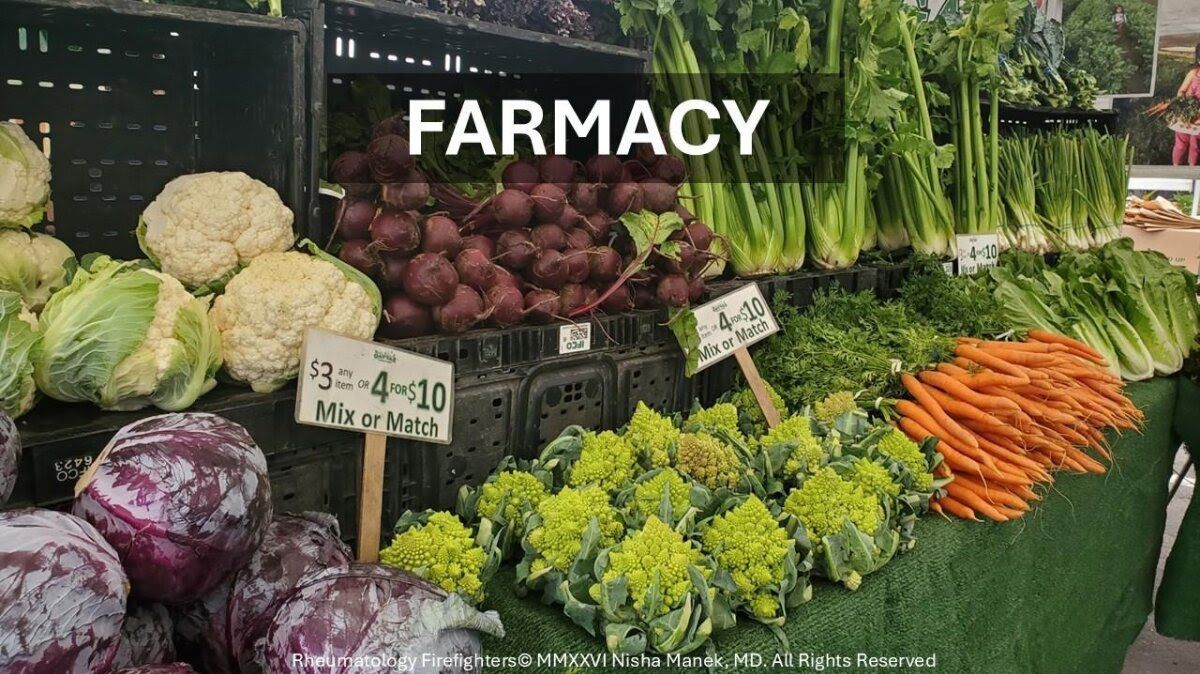
Same sound. Almost nothing else in common. One is a shelf of bottles meant to quiet a symptom. The other is a table of food from the ground it grew in, doing the work of preventing Anna’s symptoms from starting.
A Word on Truth-Telling
In rheumatology and medicine, we lean into protocols and guidelines. But over time, we drift toward comfortable half-truths. Everyone starts telling everyone else, patients or themselves, a kinder version of the truth. The kinder version steers the whole medical team off course from achieving true health. Someone must keep saying the plain thing. That is what this newsletter tries to be. You and I are on the same team. So here is the plain thing: if a patient has almost no real choice in her own supermarket, telling her to “eat more plants” is not medical advice. It is a nice lie.
What Medicine Can Learn from Old MacDonald: The Farmacy
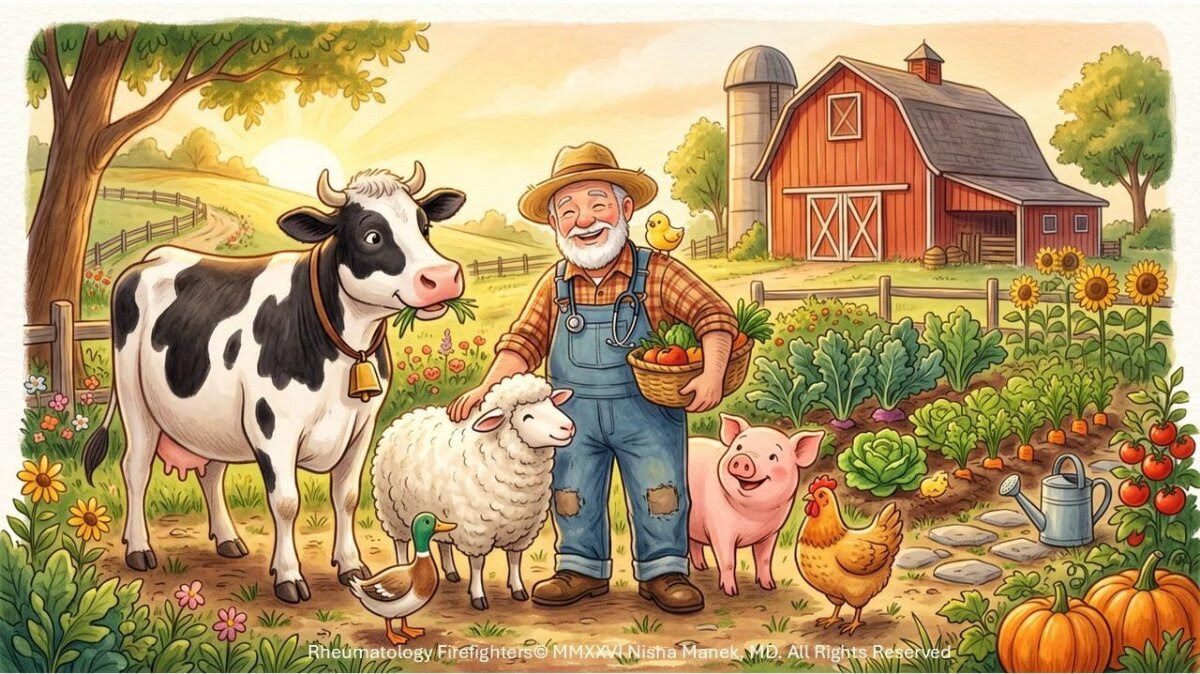
Old MacDonald had a farm. E-I-E-I-O. And on that farm he had... a health system. A surprisingly good one too! Farmer MacDonald didn’t need labels. Because long before "lifestyle medicine" had a name, the farm was already practicing it. This issue, we're taking the nursery rhyme seriously and asking what the pharmacy can learn from the farmacy.
Find the farmer MacDonald in your local area. Get to know the farmers. And one question to ask is this: what animals do you keep on your farm? It sounds like small talk. It is not. A farm that keeps animals, chickens, cows, goats, whatever the land supports, is usually a farm that is cycling manure back into the soil instead of reaching for a bag of synthetic fertilizer. Better soil grows a plant that feeds more of what your body needs. This is regenerative farming, and you can find out whether a farm practices it in one sentence, without ever reading a certification label.
E-I-E-I-O: A Prescription in Five Letters
E — Eat what you grow. On the farm, food comes out of the ground, not out of a wrapper. Whole foods, vegetables, legumes, grains, fruit are the original preventive medicine. Every era of nutrition science keeps circling back to the same finding: diets built on plants and minimally processed foods are associated with lower rates of heart disease, type 2 diabetes, and some cancers. The farmacy fills that prescription daily.
I — Involve your whole body. Nobody on a farm "works out." They just work: lifting, walking, bending, carrying, from sunrise on. Modern medicine calls this incidental physical activity, and it's one of the most powerful drugs we barely prescribe. Movement woven into the day beats movement crammed into a gym hour we keep skipping.
E — Early to bed, early to rise. Old MacDonald sleeps with the sun and wakes with the rooster. That's circadian rhythm alignment and sleep medicine now treats it as foundational. Consistent sleep and wake times regulate blood pressure, blood sugar, mood, and immune function. The rooster was a chronotherapist all along.
I — Interact with your community. A farm is never a solo act. Neighbors, family, the vet, the feed store, the market. Strong social connection is linked to longer life. Loneliness, meanwhile, carries a health risk researchers have compared to smoking. Belonging isn't a soft benefit; it's a vital sign.
O — Outdoors, every day. Fresh air, sunlight, soil, animals. Time outside supports vitamin D, lowers stress hormones, and lifts mood. Some health systems now literally write "nature prescriptions." Old MacDonald never needed the referral. He just opened the door.
With a Moo-Moo Here: Lessons from the Animals
The animals get a verse too:
The cow teaches patience. Health, like grazing, is slow and daily, not a crash program.
The pig teaches enjoyment. Pleasure at the table matters; sustainable diets are ones people actually like.
The chicken teaches rhythm. Lay a little every day. Small consistent habits out-produce heroic bursts.
The sheep teaches the herd effect. We follow the flock. Build a flock with good habits.
The duck teaches resilience. Let stress roll off your back like water. Then keep paddling.
The Fire Brigade Old MacDonald has: Trust the Critters
Anna said something about trust. Can you trust the food in the farmacy? Here’s a suggestion that may raise your eyebrows. Good! Some of you may be thinking "eeeewww" right about now. Take a look at the picture below of Brussels sprouts from my recent farmacy trip. Not sure what you're looking at?
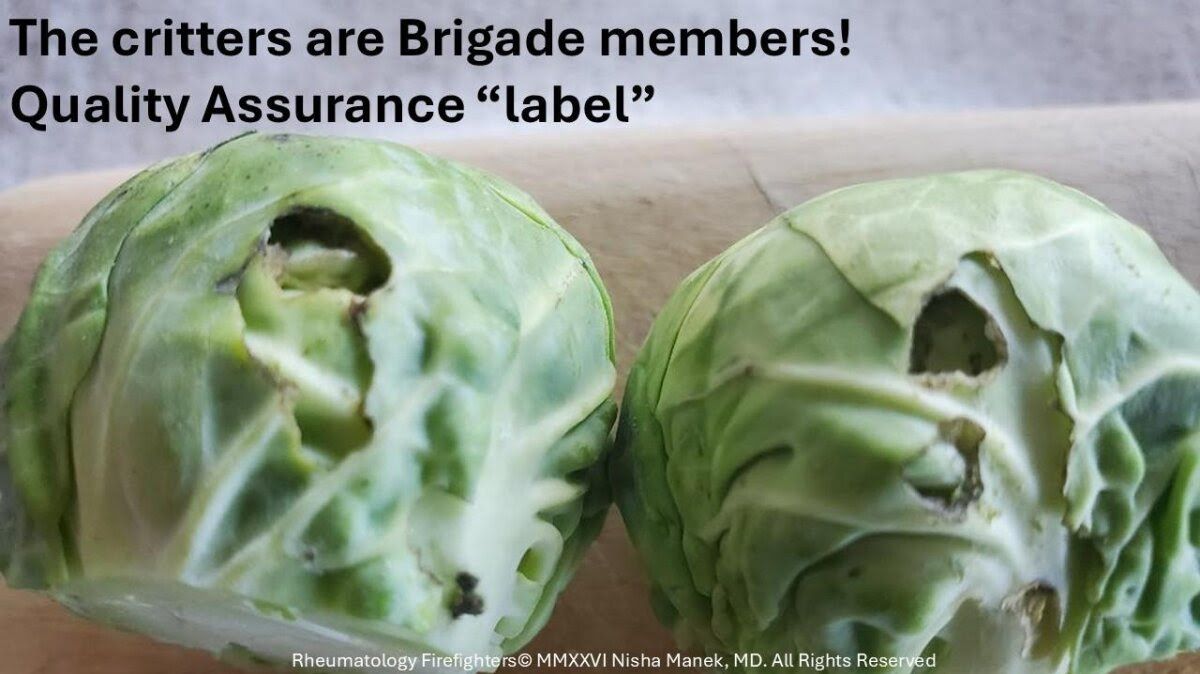
We have become used to pristine, perfect-looking fruits and vegetables, wrapped in shiny plastic. At the farmacy, look closely. If you see a few holes here and there on the lettuce, that is a good sign. If bugs are willing to eat it, it is probably real food. The critters are part of our firefighting brigade. Insects avoid plants that have been heavily treated with pesticide, the same way we would avoid eating something we knew was contaminated. A hole is not a lab test and a clean, unbitten vegetable is not automatically suspect. But it is one small, honest signal in a world full of labels designed to reassure you either way. Go to the farmers market and do your own research.
Here a Pill, There a Pill?
None of this is anti-pharmacy. Medications save lives, and skipping a prescribed drug because you bought kale is not the lesson. The lesson is sequence: the farmacy is the foundation, the pharmacy is the reinforcement. Food, movement, sleep, connection, and sunlight do the everyday healing work, and medicine steps in where they can't reach. The best care plans integrate both.
Before your next refill, before the next prescription, ask two questions.
Is this pill treating the cause, or just muting the alarm? Most of what we prescribe quiets an inflammation signal. Fewer of our tools address why the signal started firing in the first place.
If my plate changed first, would I still need this bottle? Not every bottle disappears. Some never will, and that is fine; some fires need a chemical extinguisher, not a garden. But the question is worth asking before you assume the answer is always yes.
A MOMENT OF REFLECTION
Which Way Do You Send Yourself?
When something in your body flares, what is the very first thing you reach for? A bottle, or a plate?
Anna said the hardest part was trust. Who or what taught you to trust what's on your own plate?
Until next time, remember: the pharmacy will always be there. The farmacy is asking to be noticed first.
Psalm 65:12-13: The pastures of the wilderness overflow, the hills gird themselves with joy, the meadows clothe themselves with flocks, the valleys deck themselves with grain, they shout and sing together for joy.
COMING IN ISSUE 13
Mind the Gap. Are you on a biologic? Are you well? The upcoming dispatch is about the gap between drug and inflammation control.