Inside the Consultation Room


Dear Friend,
In the last two letters I asked you to look at the outer terrain we are facing in medicine: the obesity crisis, the Emerald City of GLP-1 drugs, the fast-food restaurants paving the Yellow Brick Road with protein bowls and good intentions.
We are on the outside of the clinic, trying to extinguish the inflammation with more drugs. Now I want to bring you somewhere more intimate.
I want to bring you into the consultation room. We want to discover the inner terrain of the body’s fire.
Looking at patient after patient in my rheumatology clinic, who was not getting better despite everything modern medicine and its algorithms could offer: What is missing?

Fire-Fighting Strategies: Know Your Terrain
The answer came from a direction that is known to us. In fact, it is good medicine! Not from a newer biologic drug or a shinier protocol: Food is medicine. This is fundamental and first principle in healing. What you eat is not background information. It is clinical data. It tells the doctor what is fueling the fire inside the patient, and what might put it out.
The Power of a Good Question

On surface it appears deceptively simple. “What did you eat for breakfast today?” Yet it is a question that is concrete, daily, and modifiable. It tells you more about the inflammatory load than many blood test results. It is the power of this direct question that we can discover your inner terrain. I am a fan of what works.
Doctors have forgotten to ask this routinely. It is not in our Review of Systems (ROS), a checklist of what is bothering you. It is not in the electronic health records (EHR). It is not billable. Time is money for your doctor, and if a question generates no revenue, there is little incentive to ask.
What Happens Next
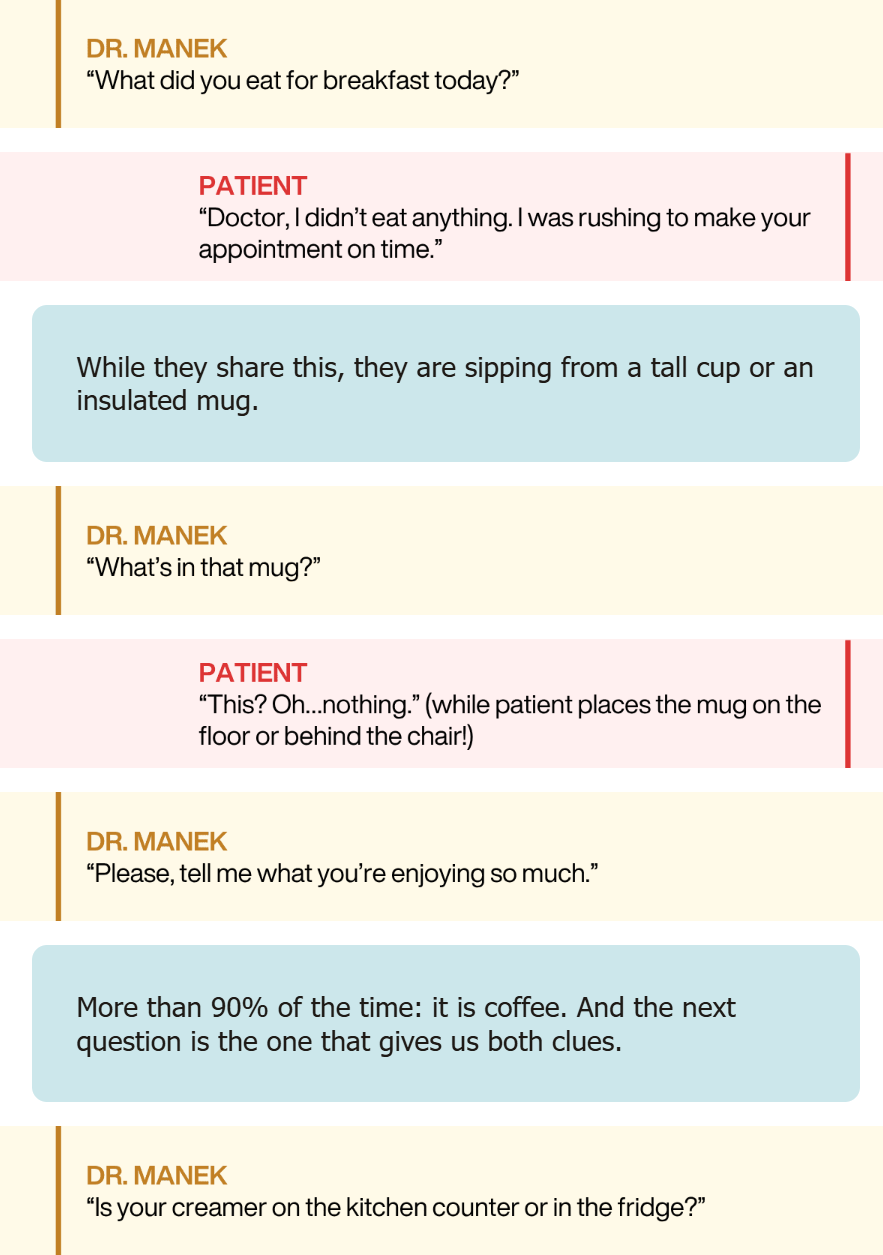
Let me tell you how this question usually unfolds. The patient arrives. They rushed to make the appointment. They are sitting across from me, and I ask:
The Blind Spot on Your Counter
If the answer is the counter, the creamer does not require refrigeration. And if it does not require refrigeration, it is not a dairy product in any meaningful sense. I was so struck by how often this answer appeared in my clinic that I took a trip to my supermarket. I stood in the coffee aisle and I read the labels. Here is what I found.
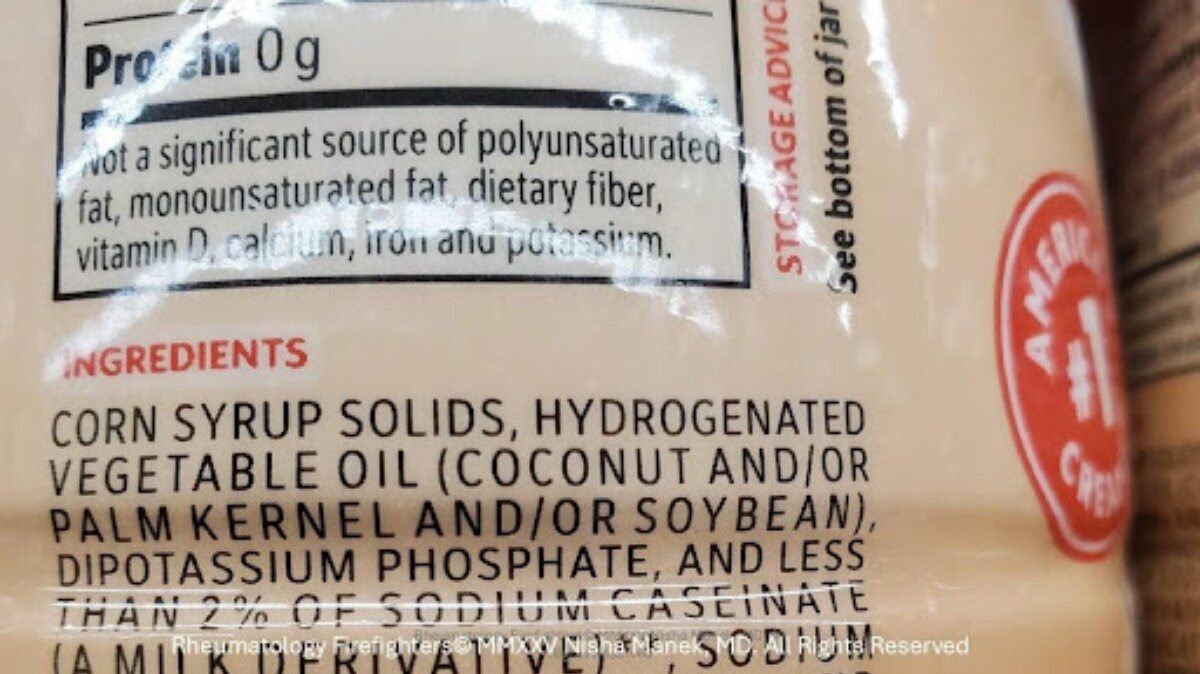
READ THE LABEL. TAKE YOUR TIME.
Corn Syrup Solids: Another name for added sugar. Linked to obesity and heart disease.
Hydrogenated Vegetable Oil: Coconut, palm kernel, soybean. Not dairy fat. Trans-fat precursor. Pro-inflammatory.
Sodium Aluminosilicate: An anti-caking agent. Also used in makeup, toothpaste, detergents, paints, and agricultural feeds. It keeps powder from clumping. It belongs in your laundry, not your coffee.
Mono- & Diglycerides: Fat-based additives used to help oil and water mix and keep processed foods smooth and stable. Like an emulsifier.
Sodium Caseinate (A Milk Derivative): The only nod to dairy. Less than 2% of the product. The cow was barely consulted.
The Kitchen Counter Test
If you love coffee and tea and use creamers, here’s a simple diagnostic:
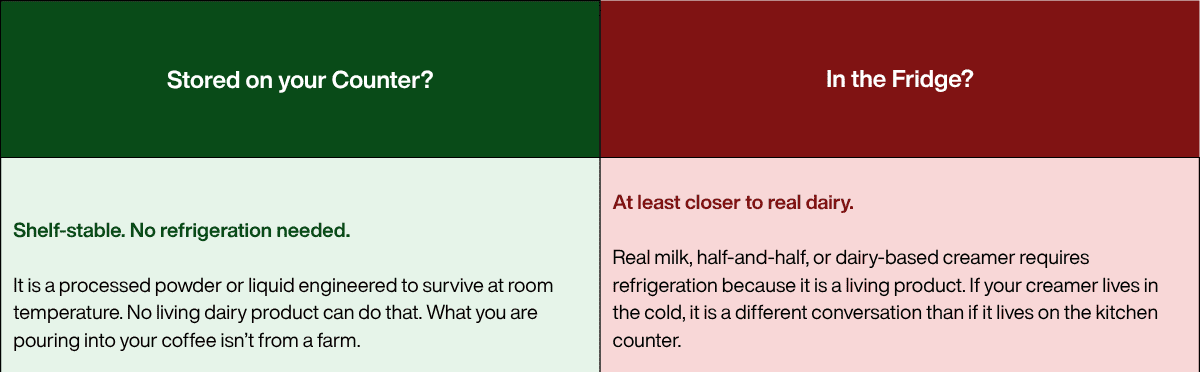

A creamer that contains an anti-caking agent also found in cosmetics, detergents, and agricultural feed. And this is what millions of people pour into their coffee every morning, and the first thing that enters their body each day because it is light, convenient, and tastes fine. Ultra-processed, shelf-stable, inflammatory nightmare masquerading as a dairy product.
Salads for Lunch and Dinner
Now I want to tell you about my patient Sharon.
Sharon was doing everything right. She had cut out the junk food. She had given up the drive-through. She had committed, with real discipline, to eating vegetables and salads for lunch and dinner. And yet she could not lose weight. The inflammation in her joints was not improving. Every three months, she came into my office for steroid injections into her knee joints. Then, the injections provided little pain relief, maybe two weeks at most. She was frustrated, confused, and quietly beginning to doubt herself.
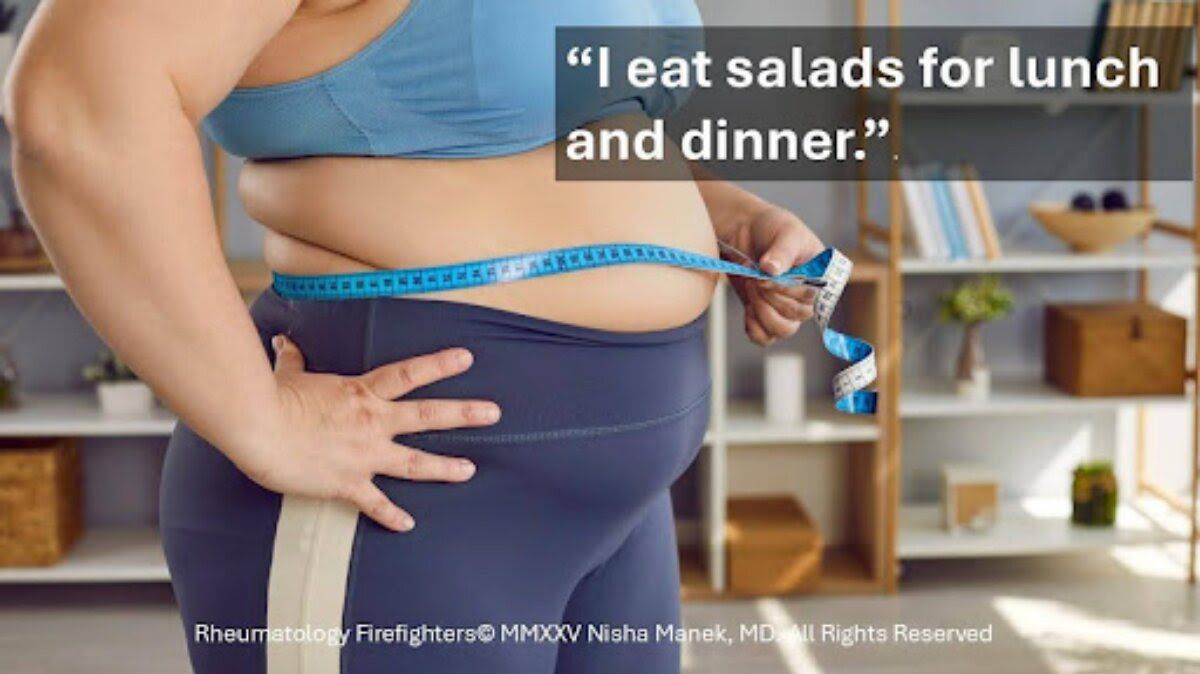
This is one of the most common and most heartbreaking presentations in my clinic. The patient who is genuinely trying. Who is not cheating, not in denial. Who has made real changes and is not seeing results. And who arrives carrying a quiet shame, wondering what is wrong with them.
Nothing was wrong with Sharon. But something was hiding in plain sight. Something she had never thought to question, because it was labelled “light” and felt like the right choice. I asked Sharon to do something no-one has done before in medicine…

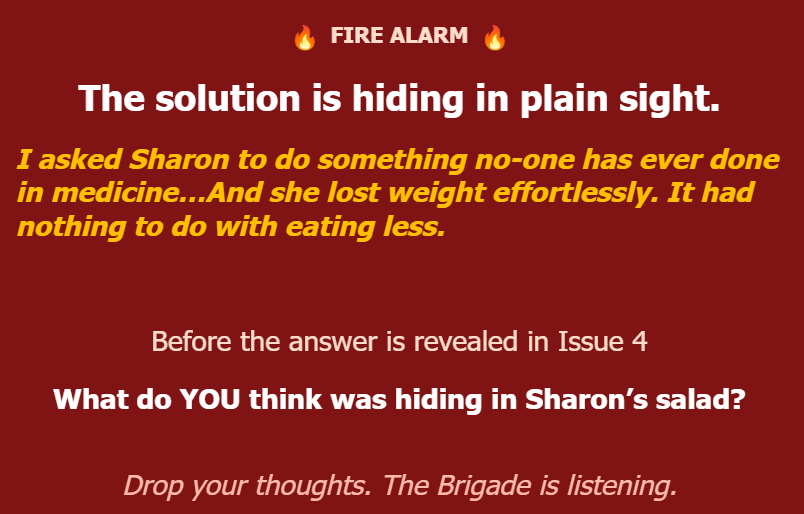
COMING IN ISSUE 04
Sharon’s answer. The hidden inflammatory saboteur in the “healthy” diet and what it means for someone who is doing everything right and getting nowhere.
Until next time, keep asking the questions. The answers are always closer than they appear.